
iRhythm Clinical Library of Evidence
The iRhythm™ clinical library highlights key studies across a range of clinical focus areas, including atrial fibrillation detection, ventricular arrhythmias, monitoring duration, and health system impact. Over 135 original scientific manuscripts demonstrate the value of Zio™ long–term continuous monitoring (LTCM) service.1 Our commitment to research reflects our dedication to advancing medical knowledge and shaping the standard of care worldwide.

Explore the clinical evidence that supports the accuracy, efficiency, and real-world value of the Zio™ LTCM service.
Select a category below.
Featured Clinical Evidence
AF DETECTION & MONITORING ACCURACY
AI-enabled Arrhythmia Analysis
Hannun et al., Nature Medicine, 2019
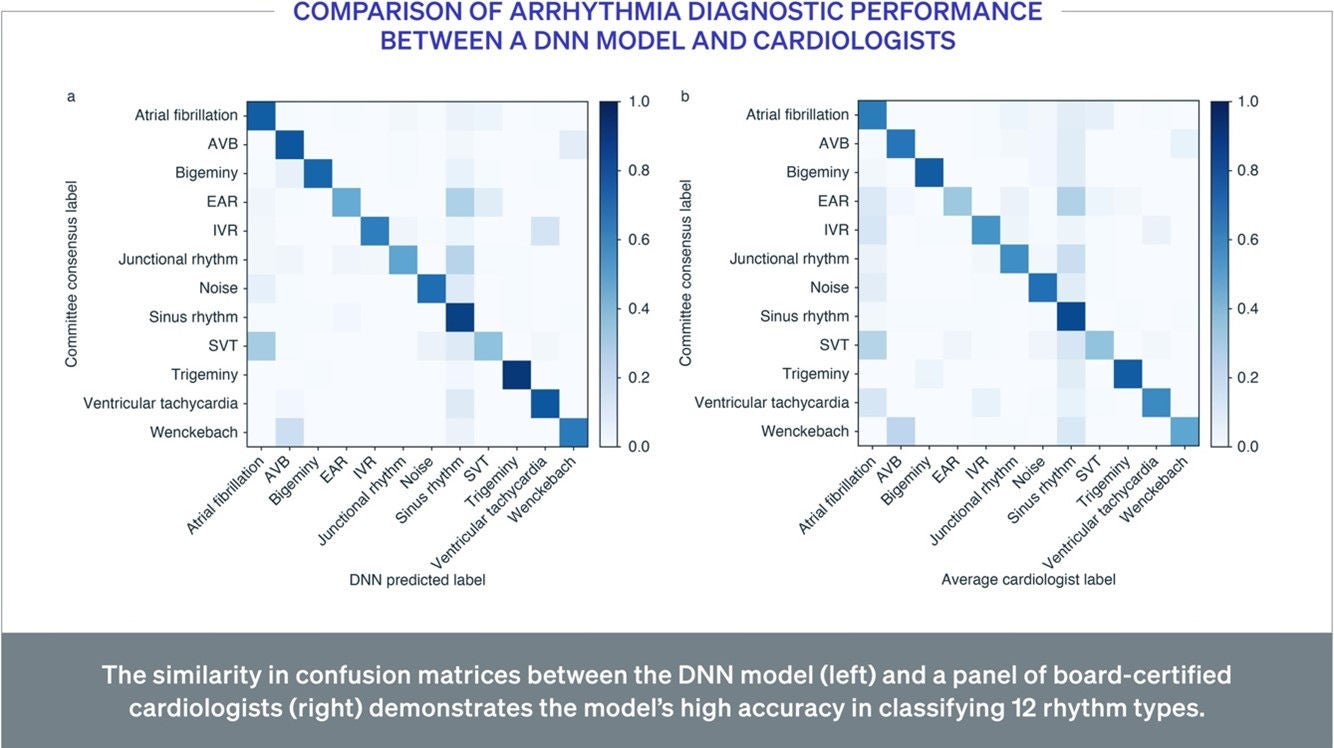
Cardiologist-level arrhythmia detection and classification in ambulatory electrocardiograms using a deep neural network
Hannun et al. Nature Medicine. 2019.
Study Design:
Model development and validation study evaluating a deep neural network (DNN) trained to detect arrhythmias using a large (n=53,549) real-world ECG dataset from Zio® LTCM devices.
The DNN was trained using 91,232 ECG recordings and classified 12 rhythm types, including atrial fibrillation, tachycardia, and bradyarrhythmia. Performance was evaluated against consensus labels from board-certified cardiologists.
Key Findings:
The AI model with scalable, high-accuracy arrhythmia detection matched or exceeded average cardiologist performance across most arrhythmia types, which could reduce the amount of misdiagnosed computerized ECG interpretations.
- Hannun et al. Cardiologist-level arrhythmia detection and classification in ambulatory electrocardiograms using a deep neural network. Nat Med. 2019;25:65-69. https://doi.org/10.1038/s41591-018-0268-3
Detecting AF in Patients After Stroke
Kaura et al. Eur J Med Res. 2019.
Early prolonged ambulatory cardiac monitoring in stroke (EPACS): an open-label randomised controlled trial
Kaura et al. European Journal of Medical Research. 2019.
Study Design:
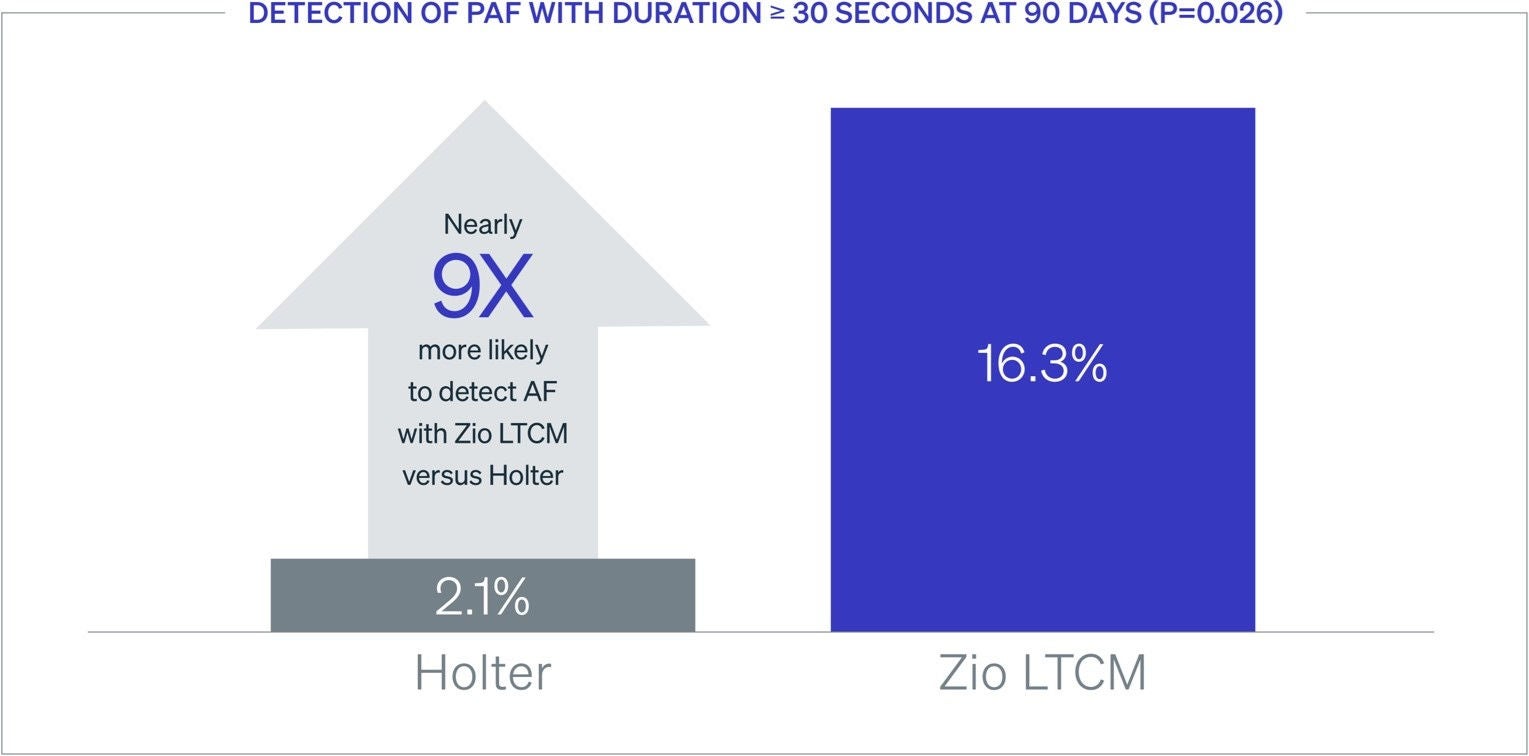
Open-label, randomized controlled trial comparing early use of Zio LTCM service versus conventional Holter monitoring in adults (n=116) with recent (<72 hours) cryptogenic stroke or transient ischemic attack (TIA) and no known history of atrial fibrillation (AF).
Participants were randomized to receive either a 14-day Zio monitor or a short-duration Holter. The primary endpoint was the detection of paroxysmal atrial fibrillation (PAF) ≥ 30 seconds within 90 days.
Key Findings:
Early and prolonged patch-based monitoring resulted in a higher likelihood of AF diagnosis and greater anticoagulant use compared to short-duration Holter, supporting prolonged 14-day monitoring in cryptogenic stroke or TIA patients.
- Kaura et al. Early prolonged ambulatory cardiac monitoring in stroke (EPACS): an open-label randomised controlled trial. Eur J Med Res. 2019;24(1):25. doi:10.1186/s40001-019-0383-8
- Based on US data.
BENEFITS OF 14-DAY MONITORING
Diagnostic Utility of a Leadless Device
Turakhia, et al. American Journal of Cardiology. 2013.
Diagnostic utility of a novel leadless arrhythmia monitoring device1,2
Turakhia, et al. American Journal of Cardiology. 2013.
Study Design:
Retrospective analysis of first-time users of Zio LTCM to assess wear time, signal quality, and diagnostic yield for arrhythmia detection during extended ambulatory ECG monitoring.3 Consecutive patients (n=26,751) prescribed extended monitoring wore Zio monitors continuously for up to 14 days.
Key Findings:
Monitoring for 14 days with Zio LTCM service maximizes diagnostic yield compared to monitoring for 24-48 hours, such as monitoring with traditional Holter.1-6
- Turakhia et al. Diagnostic Utility of a Novel Leadless Arrhythmia Monitoring Device. The American Journal of Cardiology. 2013;112(4):520-524. doi:https://doi.org/10.1016/j.amjcard.2013.04.017
- The study is based on the previous generation Zio XT device data. The devices used in the Zio LTCM monitoring service are deemed substantially equivalent. Additional data on file.
- Zio LTCM service refers to both Zio XT and Zio monitor service.
- Zio service provides continuous, uninterrupted recording and a comprehensive end-of-wear report.
- Zio monitor and ZEUS are CE-marked.
- Contraindications: Do not use the Zio monitor for critical care patients or for patients with symptomatic episodes where instance variations in cardiac performance could result in immediate danger to the patients or when real-time or in-patient monitoring should be prescribed. (Refer to the Zio monitor Instructions for Use for the full list of contraindications.).
- Based on previous generation Zio XT device data. Zio monitor utilizes the same operating principles and ECG algorithm. Additional data on file.
Zio Uncovers Clinically Actionable VT Arrhythmias
Solomon et al., BMC Cardiovasc Disord, 2016
Incidence and timing of potentially high-risk arrhythmias detected through long term continuous ambulatory electrocardiographic monitoring
Solomon et al. BMC Cardiovascular Disorders. 2016.
Study Design:
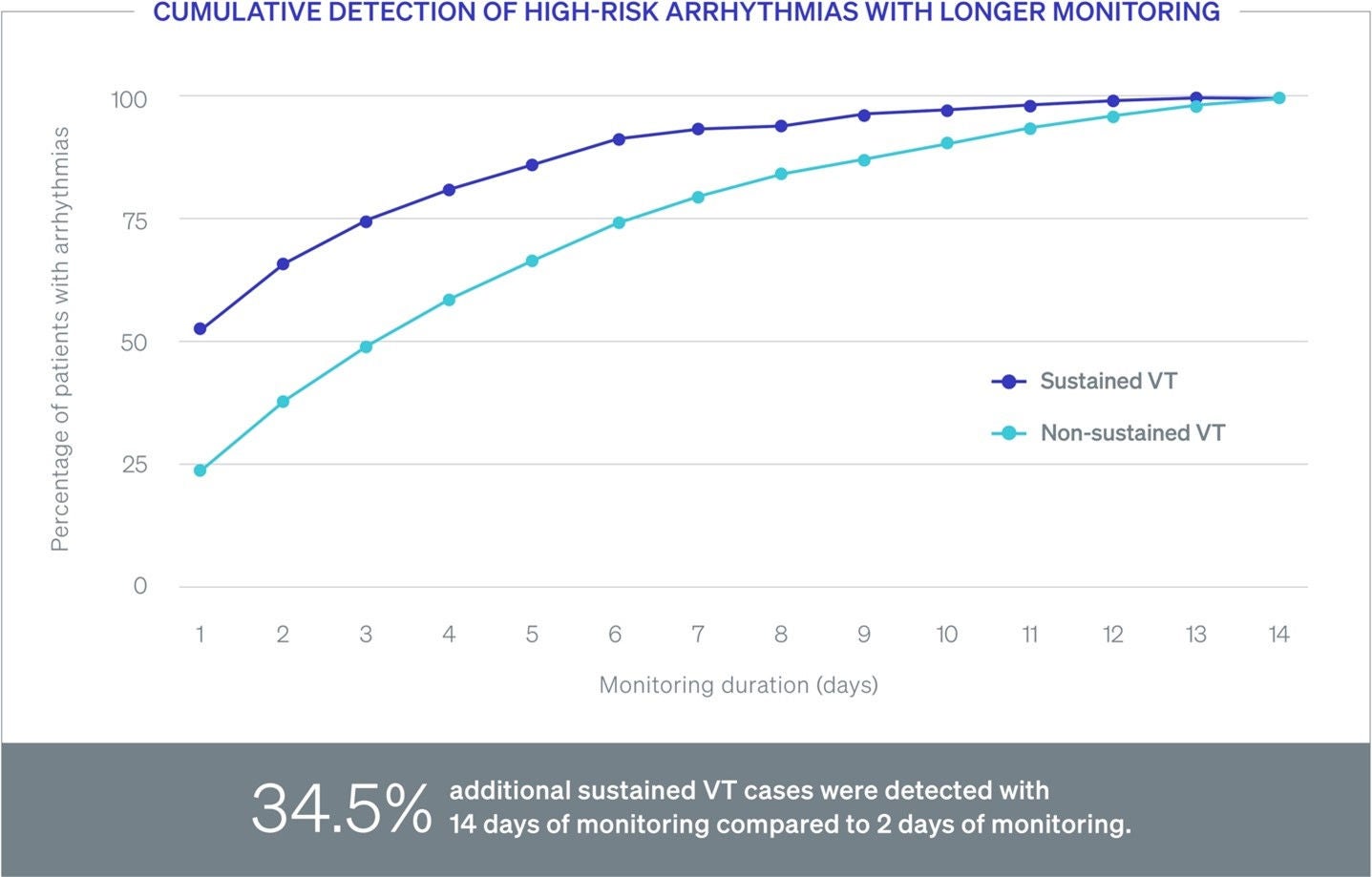
Retrospective analysis of Zio LTCM service data collected from 2011 to 2013 to examine incidence and timing of ventricular arrhythmias across adults undergoing ambulatory cardiac monitoring in routine outpatient care (n=122,815). The timing of first arrhythmia detection and the cumulative diagnostic yield by day of monitoring were evaluated.
Key Findings:
65.5% of sustained ventricular tachycardia (VT) and 38% of non-sustained VT were detected by 48 hours. Extended wear increased diagnostic yield for all arrhythmias.
- Solomon et al. Incidence and timing of potentially high-risk arrhythmias detected through long term continuous ambulatory electrocardiographic monitoring. BMC Cardiovasc Disord. 2016;16:35. doi:10.1186/s12872-016-0210-x
Longer Monitoring to detect PVC burden
Krumerman et al., Heart Rhythm, 2024
Premature ventricular complexes: Assessing burden density in a large national cohort to better define optimal ECG monitoring duration1
Krumerman et al. Heart Rhythm. 2024.
Study Design:
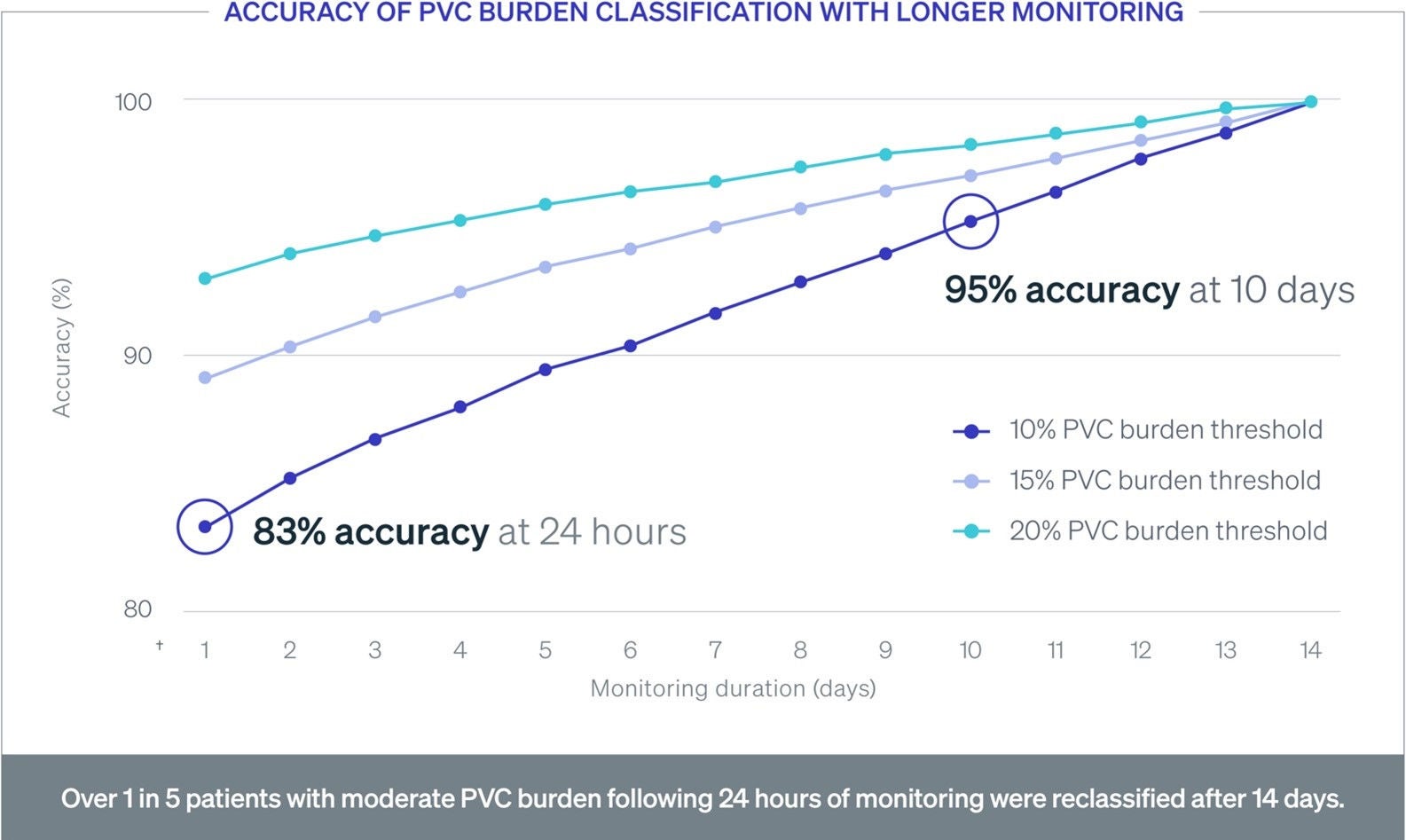
Retrospective analysis of Zio LTCM data across 106,705 patch monitors to evaluate the monitoring duration needed for accurate premature ventricular complex (PVC) burden classification and VT detection. The adult patients were categorized into low (5 to <10%), moderate (10 to <20%), or high (≥20%) PVC burden groups.
Key Findings:
Longer monitoring (≥7 days) with Zio LTCM improved PVC burden accuracy.
- Krumerman et al. Premature ventricular complexes: Assessing burden density in a large national cohort to better define optimal ECG monitoring duration. Heart Rhythm. 2024;21(8):1289-1295. doi:10.1016/j.hrthm.2024.04.066
Extended Ambulatory ECG Monitoring
Rowin et al. Heart Rhythm. 2024.
Extended ambulatory ECG monitoring enhances identification of ventricular tachycardia in patients with hypertrophic cardiomyopathy1
Rowin et al. Heart Rhythm. 2024.
Study Design:
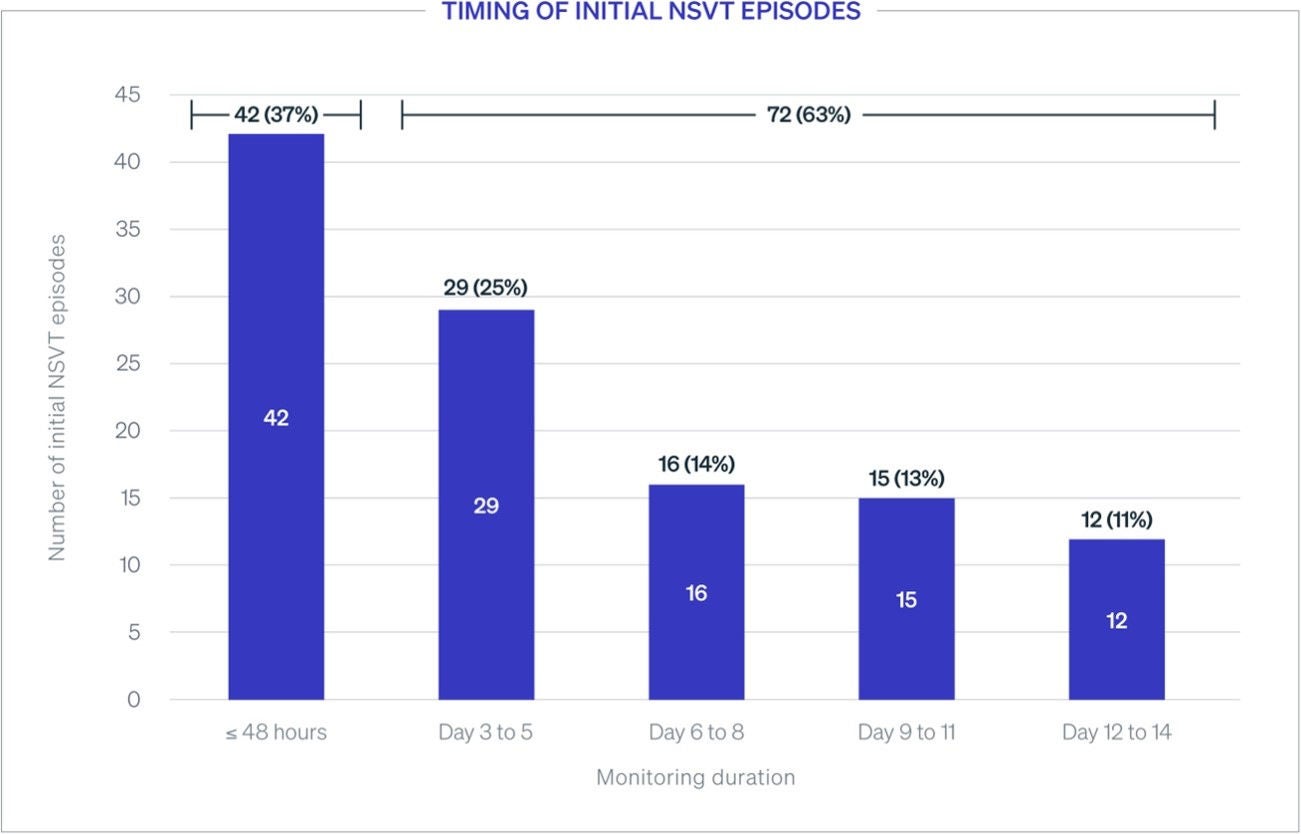
Prospective observational study evaluating the diagnostic yield of extended ECG monitoring (14 days) using Zio LTCM versus standard 48-hour monitoring for detecting nonsustained ventricular tachycardia (NSVT) in 236 patients with hypertrophic cardiomyopathy (HCM).
Key Findings:
Extended monitoring significantly improves the detection of arrhythmic risk markers in - HCM.2
- 63% of NSVT cases were detected after the first 48 hours
- The 14-day diagnostic yield of high-risk NSVT patterns was 3x higher than 48 hours (p<0.001)
- Rowin et al. Extended ambulatory ECG monitoring enhances identification of higher-risk ventricular tachyarrhythmias in patients with hypertrophic cardiomyopathy. Heart Rhythm. 2025
HEALTH SYSTEM PERFORMANCE & REAL-WORLD IMPACT
CAMELOT: Real-Word Evidence Using a Large Medicare Fee-For-Service Database
Reynolds et al., Am Heart J, 2024
Comparative effectiveness and healthcare utilization for ambulatory cardiac monitoring strategies in Medicare beneficiaries1,2
Reynolds et al. American Heart Journal. 2024.
Study Design:
Retrospective observational cohort study using Medicare claims data across 287,780 beneficiaries to compare diagnostic yield, retesting rates, and downstream clinical impact across four types of ambulatory cardiac monitors (ACMs): Holter, event, mobile cardiac telemetry (MCT), and long-term continuous monitoring (LTCM) with the Zio XT 14-day patch.3
Key Findings:
Zio LTCM had the highest initial diagnostic yield of specified arrhythmia diagnosis4,5 and the lowest odds of retesting within 6 months.
- Reynolds et al. Comparative effectiveness and healthcare utilization for ambulatory cardiac monitoring strategies in Medicare beneficiaries. Am Heart J. 2024;269:2534. https://doi.org/10.1016/j.ahj.2023.12.002
- The study is based on the previous generation Zio XT device data. The devices used in the Zio LTCM monitoring service are deemed substantially equivalent. Additional data on file.
- Zio LTCM service refers to Zio XT and Zio monitor service.
- A specified arrhythmia refers to an arrhythmia encounter diagnosis as per Hierarchical Condition Categories (HCC) 96.
- The Zio service facilitates a diagnosis as determined by a physician.
- Based on US data.
AVALON: Real-World Evidence Study Using a Large Commercial Claims Database
Russo et al. AJMC. 2025.
Assessment of variation in ambulatory cardiac monitoring among commercially insured patients1
Russo et al. American Journal of Managed Care. 2025.
Study Design:
Retrospective cohort study using a large U.S. commercial claims database across 428,707 diagnostic-naive patients to evaluate new arrhythmia diagnosis, repeat monitoring, cardiovascular (CV) events, and healthcare utilization and total costs. Patients were categorized by ACM type (LTCM, Holter, event) and LTCM manufacturer.
Key Findings:
Zio LTCM was associated with a higher likelihood of arrhythmia diagnosis and a lower likelihood of a cardiovascular (CV) event at 1 year.2–5 Compared to Holter monitoring services and non-iRhythm LTCM, Zio LTCM also showed lower odds of repeat testing within 180 days.
- Russo et al. Assessment of variation in ambulatory cardiac monitoring among commercially insured patients. Am J Manag Care. Published online August 13, 2025. doi:10.37765/ajmc.2026.89782
- The Zio service facilitates a diagnosis as determined by a physician.
- CV events were defined by the study protocol.
- Arrhythmias were defined by a panel of clinical experts and study investigators.
- Zio LTCM service refers to Zio XT and Zio monitor service.
- Based on US data.
Continue the conversation
The Zio™ Service helps you detect arrhythmias earlier, reduce administrative burden, and enhance patient experience — all through a single, streamlined platform.
Connect with an iRhythm specialist today to discover how the Zio service can fit into your workflow.
Continue the conversation

- Data on file, iRhythm Technologies. 2026
The Zio™ service is a long-term continuous ambulatory cardiac monitoring service. It consists of the Zio™ monitor that collects beat-to-beat ECG data and can be worn for up to 14 days; the Zio™ ECG Utilization Service (ZEUS) System deep learned algorithm, which detects arrhythmias. The data is reviewed and curated by a team of Qualified ECG Specialists (QES) to provide the final patient report.
For indications for use, warnings & contraindications, visit here.
iRhythm, Zio, Zio monitor and ZioSuite are trademarks of iRhythm Technologies, Inc. ©2026 All rights reserved.
Zio™ monitor and ZEUS are CE-marked (CE2797).
Zio monitor, ZEUS and Zio service are currently available in Austria, Netherlands, Spain & Switzerland.
For further regulatory information visit here.
WEB0214.01