An Introduction to Arrhythmias

An arrhythmia is an abnormal rhythm of the heart. Physicians prescribe the iRhythm™ monitoring service, which includes Zio™ ECG monitors, to detect these abnormalities.
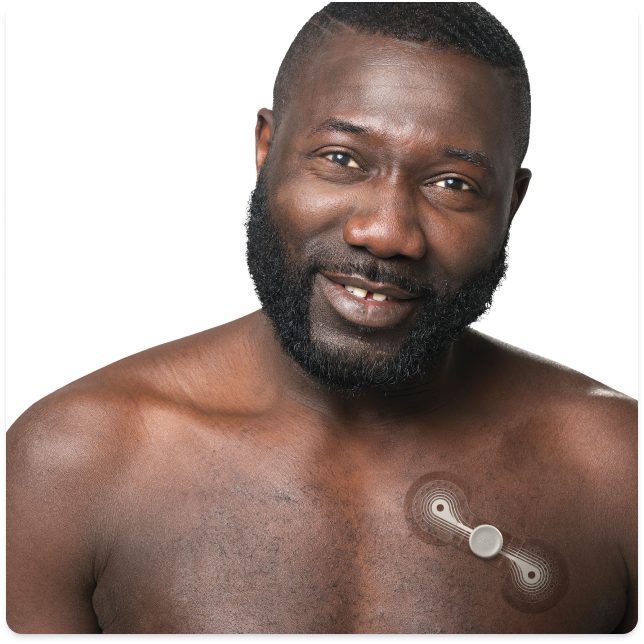
Patient wearing Zio monitor

Overview of arrhythmias

What is an arrhythmia?1

An arrhythmia is an abnormal rhythm of the heart. Arrhythmias are labeled by the location in the heart where they originate. Rhythms that start in the lower chambers, or ventricles, are called ventricular arrhythmias, while those that start in the upper chambers, or atria, are called supraventricular arrhythmias.

Some patients may feel symptoms, while others may not. Common symptoms include:

  • Heart palpitations
  • Shortness of breath
  • Dizziness
  • Lightheadedness
  • Syncope/fainting
  • Fatigue/tiredness
  • Anxiety

Common types of arrhythmias

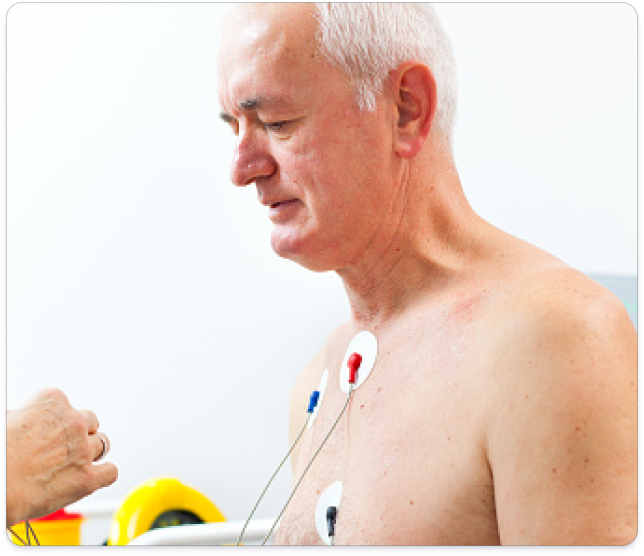
Physician examining patient

Bradycardia

Abnormally slow heart rhythm

Common types3:
  • Sinus bradycardia: The upper chambers produce a slower than normal heartbeat, also referred to as sinus node dysfunction or sick sinus syndrome
  • Heart block: Conduction slows in the bottom chambers. There are several types of heart block. Treatment will be dependent on the type. 
    • 1st degree: Signal is slowed or delayed from the atrium to the ventricle
    • Wenckebach: A type of 2nd-degree heart block, also referred to by clinicians as Mobitz I
    • Mobitz II: A type of 2nd-degree heart block
    • Complete heart block (CHB): Also referred to by clinicians as 3rd-degree heart block
Patient wearing multiple Holter monitor leads

Tachycardia

Abnormally fast heart rhythm

Common types3:

  • Premature beat: Extra, early heartbeats, often referred to as a PAC/SVE 
or PVC/VE
  • Atrial fibrillation (AFib): The heart's upper chambers (atria) quiver or fibrillate, leading to a fast, irregular heartbeat
  • Supraventricular tachycardia (SVT): The upper chambers beat too quickly in an abnormal conduction pattern
  • Ventricular tachycardia (VT): The lower chambers beat too rapidly

Detecting irregular heart rhythms

Fortunately, there are treatments available for arrhythmias. However, before you can begin treatment, the condition must be diagnosed. There are a variety of tests that provide data to help your healthcare professional prescribe the most effective form of treatment.

An electrocardiogram — abbreviated as ECG — is a test that measures the electrical activity of the heartbeat. With each beat, an electrical impulse (or “wave”) travels through the heart. This wave causes the muscle to squeeze and pump blood from the heart. A normal heartbeat on ECG will show the timing of the top and lower chambers.
An ambulatory ECG records the electrical activity of your heart while you are doing your normal everyday activities. “Ambulatory” means that you are able to stand and walk, and are not stationary or motionless. Many heart problems are only detectable during activity such as standing or walking and will not appear in a brief test in your doctor’s office.


  1. National Heart, Lung, and Blood Institute. Types of arrhythmias. National Institutes of Health. Last updated March 24, 2022. Accessed December 17, 2024. https://www.nhlbi.nih.gov/health/arrhythmias/types
  2. Symptoms listed are from Zio monitor Indications for Use. 
  3. Heart Rhythm Society. Electrical. UpBeat.org. Last updated February 24, 2021. Accessed December 17, 2024. https://upbeat.org/heart-rhythm-disorders/electrical
  4. American Heart Association. Electrocardiogram (ECG or EKG). Last reviewed December 7, 2022. Accessed December 17, 2024. https://www.heart.org/en/health-topics/heart-attack/diagnosing-a-heart-attack/electrocardiogram-ecg-or-ekg
  5. Fabian et al. Ambulatory ECG Monitoring. In: StatPearls [Internet]. 2024 Jan. Treasure Island, FL: StatPearls Publishing. Updated November 2, 2023. Accessed December 20, 2024. https://www.ncbi.nlm.nih.gov/books/NBK597374/ 
  6. Data on file. iRhythm Technologies. 2025.  


The Zio™ service is a long-term continuous ambulatory cardiac monitoring service. It consists of the Zio™ monitor that collects beat-to-beat ECG data and can be worn for up to 14 days; the Zio™ ECG Utilization Service (ZEUS) System deep learned algorithm, which detects arrhythmias. The data is reviewed and curated by a team of Qualified ECG Specialists (QES) to provide the final patient report.

For indications for use, warnings & contraindications, visit here.

iRhythm, Zio, Zio monitor, and ZioSuite are trademarks of iRhythm Technologies, Inc. ©2026 All rights reserved.

Zio™ monitor and ZEUS are CE-marked (CE2797).

Zio monitor, ZEUS, and Zio service are currently available in Austria, the Netherlands, Spain & Switzerland.

For further regulatory information, visit here.

WEB0218.01