
Comparative Effectiveness and Healthcare Utilization for Ambulatory Cardiac Monitoring Strategies in Medicare Beneficiaries
Real-World Evidence Using a Large Medicare Fee-For-Service Database
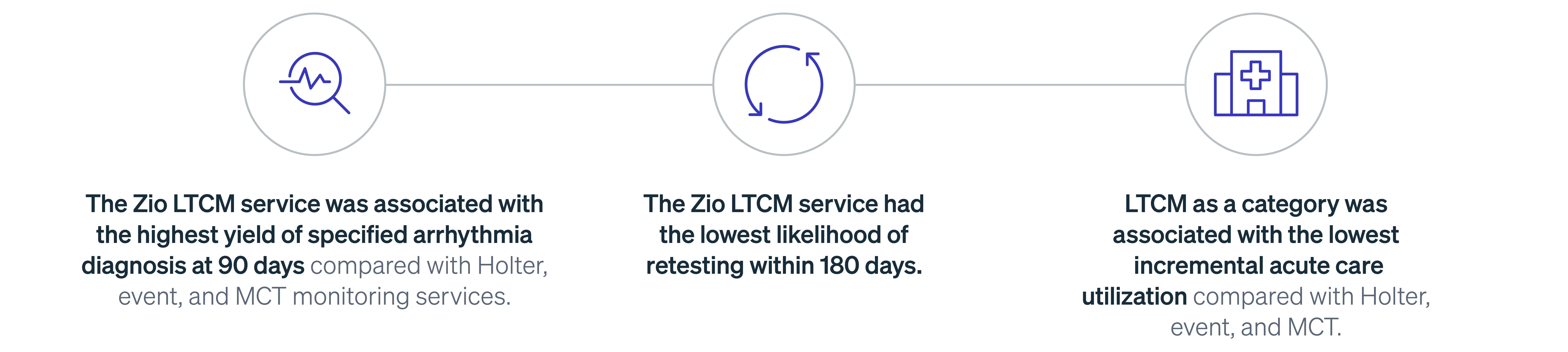
The Cardiac Ambulatory Monitor EvaLuation of Outcomes and Time to Events (CAMELOT) study—the first to utilize real-world evidence to compare the performance of different ambulatory cardiac monitors (ACMs)—found that the Zio® long-term continuous monitoring (LTCM) service was associated with the highest diagnostic yield for specified arrhythmias and the lowest likelihood of retesting.1-5

The CAMELOT study revealed clear advantages of the Zio LTCM service compared to other ACM strategies1–5:

Study Design1
Retrospective analysis using Medicare Fee-For-Service claims.
Evaluated 287,789 diagnostic-naive patients aged 65 years and older.
Patients were monitored with one of four ACM types: LTCM, Holter monitors, event monitors, or MCT.



Key Findings
CAMELOT demonstrated the real-world impact of the Zio® LTCM service in an older, comorbid population1–5:
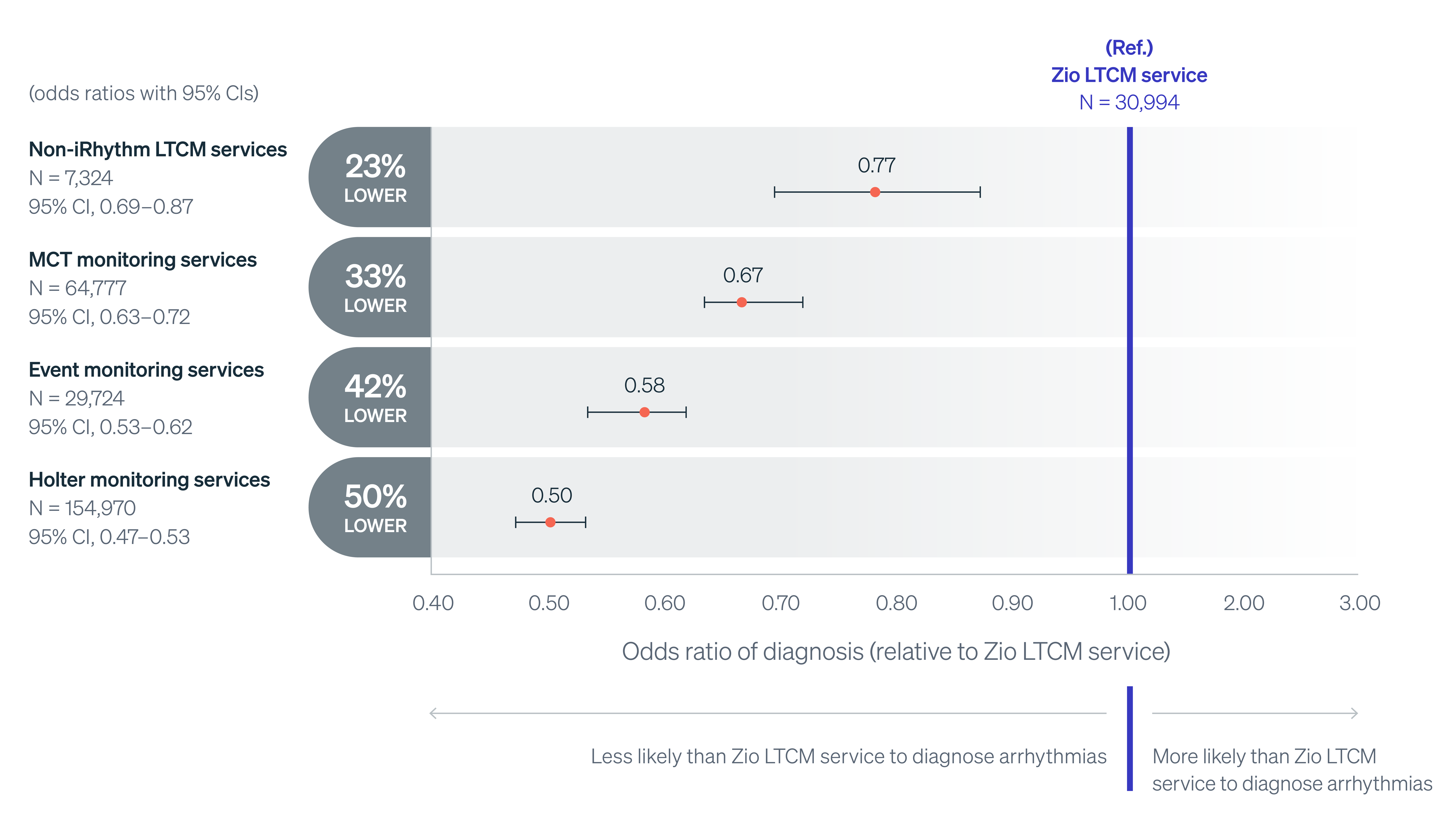
ZIO LTCM SERVICE HAD THE HIGHEST YIELD OF SPECIFIED ARRHYTHMIA DIAGNOSIS5 WITHIN 90 DAYS
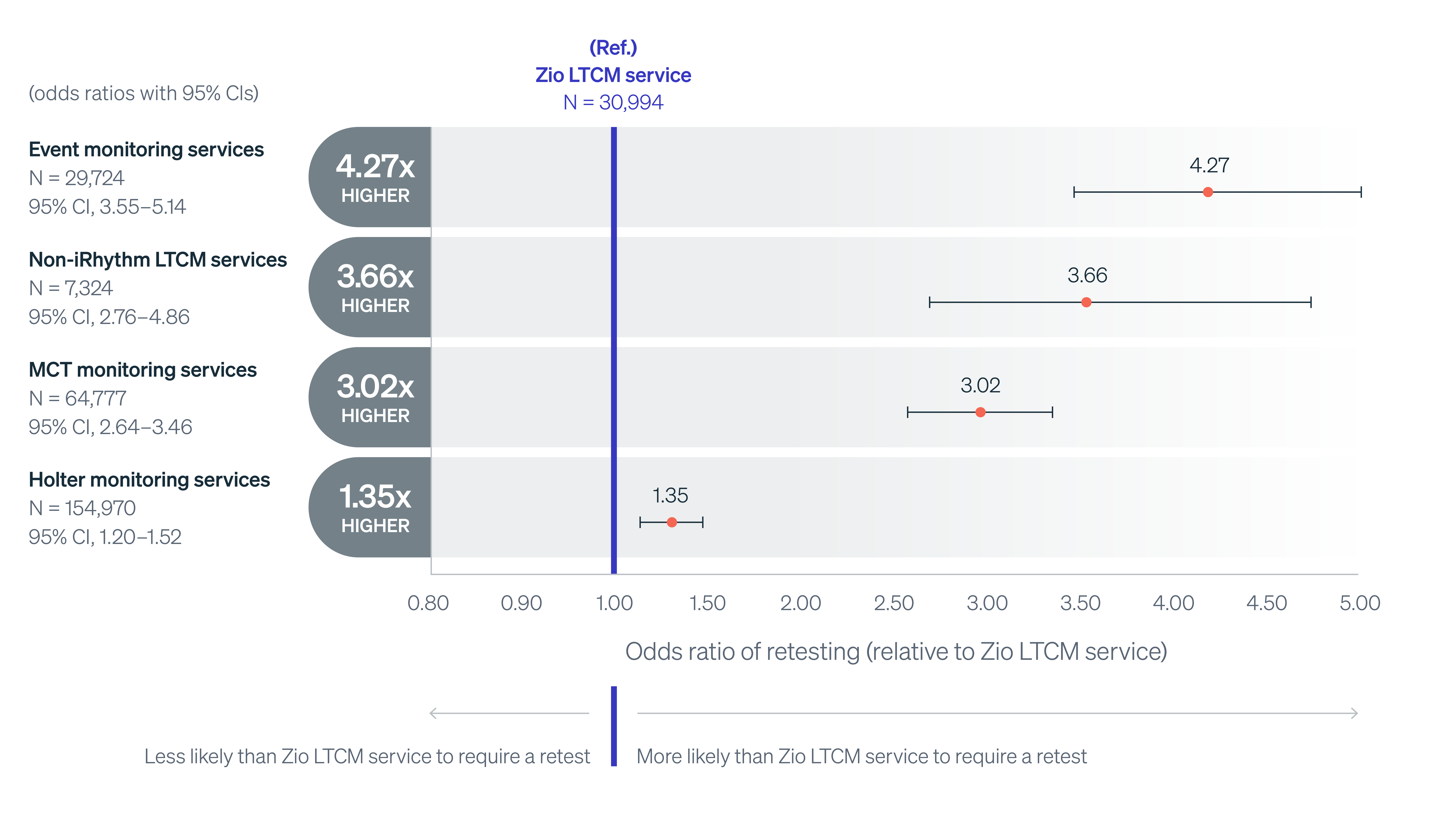
ZIO LTCM SERVICE SHOWED THE LOWEST LIKELIHOOD OF RETESTING WITHIN 180 DAYS


Over 700,000 patients across Medicare and commercial populations were evaluated through the CAMELOT1 and AVALON6 studies. CAMELOT was the first large-scale real-world study to demonstrate variation in outcomes by ACM type in a Medicare population. AVALON expanded on CAMELOT by including a commercial audience spanning the social and economic spectrum. Both CAMELOT and AVALON drew the same conclusions: long-term continuous monitoring, especially with the Zio LTCM service, enhanced diagnostic capability, reduced healthcare resource utilization, and improved patient outcomes.1–8
From Medicare beneficiaries to commercially insured adults across the social and economic spectrum, these landmark real-world analyses provide robust evidence that monitoring strategy matters and that LTCM is associated with differences that extend well beyond detection alone.
Fill out the form to access the study.
Keep reading
- Reynolds et al. Comparative effectiveness and healthcare utilization for ambulatory cardiac monitoring strategies in Medicare beneficiaries. Am Heart J. 2024;269:25-34. doi:10.1016/j.ahj.2023.12.002
- A specified arrhythmia refers to an arrhythmia encounter diagnosis as per Hierarchical Condition Categories (HCC) 96.
- The study is based on the previous generation Zio XT device data. The devices used in the Zio LTCM monitoring service are deemed substantially equivalent. Additional data on file.
- Zio LTCM service refers to Zio XT and Zio monitor service.
- The Zio service facilitates a diagnosis as determined by a physician.
- Russo et al. Assessment of variation in ambulatory cardiac monitoring among commercially insured patients. Am J Manag Care. August 13, 2025. doi:10.37765/ajmc.2025.89782
- The Zio LTCM service facilitates a diagnosis as determined by a physician.
- Arrhythmias were defined by a panel of clinical experts and study investigators.
WEB0076.02