
Proven cardiac monitoring that reduces utilization and cost1-3
The right cardiac monitoring strategy may support reduced missed diagnoses.1-6, lower preventable utilization, and improve outcomes.1-3

Your cardiac monitoring policy can have a strategic impact on your population’s total cost of care: detection accuracy, time to diagnosis, healthcare resource utilization, and member satisfaction
Backed by real-world evidence from 700,000+ Medicare and Commercial patients.4,5
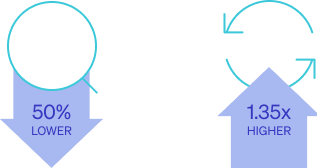
Compared to Holter, event, and standard patch monitoring, Zio Long-term continuous monitoring (LTCM) was associated with:1,6

Missed diagnoses can drive avoidable costs across your members.
Compared to all other ambulatory cardiac monitoring types, members monitored with Zio LTCM services were associated with reduced overall healthcare resource utilization.1-6
The right monitoring strategy drives better population performance
Real-world evidence that demonstrates a clinical and financial advantage
Ambulatory cardiac monitoring studies across Medicare Fee-for-Service (FFS) and commercial populations.


Better detection with Zio LTCM can lead to: lower utilization and lower cost of care
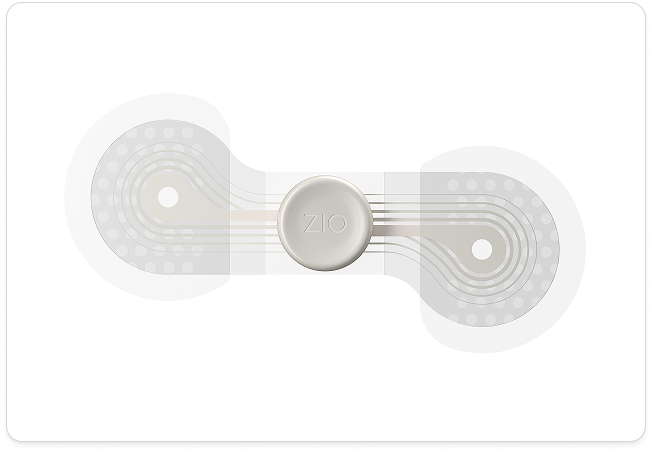
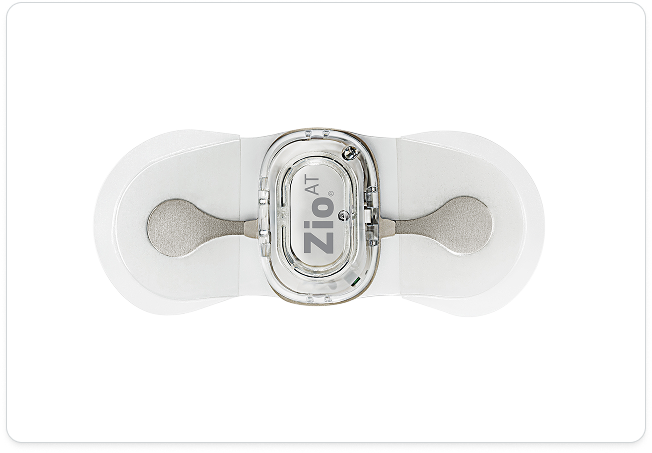
Zio monitoring service is designed for members and providers
Trusted by hundreds organizations managing millions of lives


Check CMS listings and product IFU for full code descriptions, indications, and coverage criteria at: www.cms.gov
Let’s improve detection and reduce avoidable costs — together
Use the form below to speak with our team about bringing Zio cardiac monitoring service in-network or exploring a value-based pilot.
- Reynolds et al. Comparative effectiveness and healthcare utilization for ambulatory cardiac monitoring strategies in Medicare beneficiaries. Am Heart J. 2024;269:25-34. doi: 10.1016/j.ahj.2023.12.002.
- Russo et al. Assessment of variation in ambulatory cardiac monitoring among commercially insured patients. Am J Manag Care. Published online August 13, 2025. doi:10.37765/ajmc.2026.89782
- Zio LTCM service refers to Zio XT and Zio monitor service.
- In AVALON, Arrhythmias were defined by a panel of clinical experts and study investigators.
- In CAMELOT, A specified arrhythmia refers to an arrhythmia encounter diagnosis as per Hierarchical Condition Categories (HCC) 96.
- The Zio service facilitates a diagnosis as determined by a physician
- CV events were defined by the study protocol. January CT, et al. Circulation. 2019;140:e125–e151.
- NCQA. HEDIS® Atrial Fibrillation and Anticoagulation (AFIB) Measure.
- CMS. Medicare Advantage Star Ratings Technical Notes.
- Barrett et al. Comparison of 24-hour Holter Monitoring with 14-day Novel Adhesive Patch Electrocardiographic Monitoring. The American Journal of Medicine. 2014;127(1):95.e11-95.e17. doi:https://doi.org/10.1016/j.amjmed.2013.10.003
- Based on previous generation Zio XT device data. Zio monitor utilizes the same operating principles and ECG algorithm. Additional data on file.
- Data on file. iRhythm Technologies, 2022-2023.
- A specified arrhythmia refers to an arrhythmia encounter diagnosis as per Hierarchical Condition Categories (HCC) 96.
- The time to diagnosis was defined as the number of days between the CPT code for the technical component to the ICD-10 code for an actionable arrhythmia diagnosis.
- Battisti et al. Abstract 4141717: Feasibility of point-of-wear patient satisfaction surveys to validate patient-centered product enhancements: results from over 300,000 patients for long-term ambulatory cardiac monitoring. Circulation. 2024;150:A4141717. doi:10.1161/circ.150.suppl_1.4141717. https://www.ahajournals.org/doi/abs/10.1161/circ.150.suppl_1.4141717
- Data on file. iRhythm Technologies, 2026.
- Data on file. iRhythm Technologies, 2023.
- Data on file. iRhythm Technologies, 2024.
- Data on file. iRhythm Technologies, 2025.
- Data on file. iRhythm Technologies, 2020.
- Hannun et al. Cardiologist-level arrhythmia detection and classification in ambulatory electrocardiograms using a deep neural network. Nat Med. 2019;25:65-69.
- CPT Copyright 2012 American Medical Association (AMA). All rights reserved. CPT is a registered trademark of the American Medical Association.
- CPT Disclaimer: Applicable FARS/DFARS Restrictions Apply to Government Use. Fee schedules, relative value units, conversion factors and/or related components are not assigned by the AMA, are not part of CPT, and the AMA is not recommending their use. The AMA does not directly or indirectly practice medicine or dispense medical services. The AMA assumes no liability for data contained or not contained herein.
- Indications for Use: the Zio monitor is a prescription-only, single-use ambulatory ECG monitor that continuously records data for up to 14 days. It is indicated for use on patients 18 years and older, who may be asymptomatic or who may suffer from transient symptoms such as palpitations, shortness of breath, dizziness, light-headedness, pre-syncope, syncope, fatigue, or anxiety.
- Do not use Zio AT for patients with symptomatic episodes where variations in cardiac performance could result in immediate danger to the patient or when real-time or in-patient monitoring should be prescribed. Refer to the Zio AT labeling Instructions for Use for full contraindications.
- This device is not intended for use in critical care patients because the reporting timeliness is not consistent with life-threatening arrhythmias such as ventricular fibrillation.
- The Zio AT device is intended to capture and transmit symptomatic and asymptomatic cardiac events and record continuous electrocardiogram (ECG) data for long-term monitoring. It is indicated for use on patients 18 years or older who may be asymptomatic or who may suffer from transient symptoms such as palpitations, shortness of breath, dizziness, light-headedness, presyncope, syncope, fatigue, or anxiety. It is not intended for use on critical care patients.
WEB0014.02